Subcontractors from Eastern Europe: flexible capacity for your projects
When orders grow faster than your own workforce, we bring in selected subcontractors from Poland, Romania, Slovakia, Bulgaria and further countries: for industrial assembly, metal fabrication, logistics, hospitality, agriculture and construction.
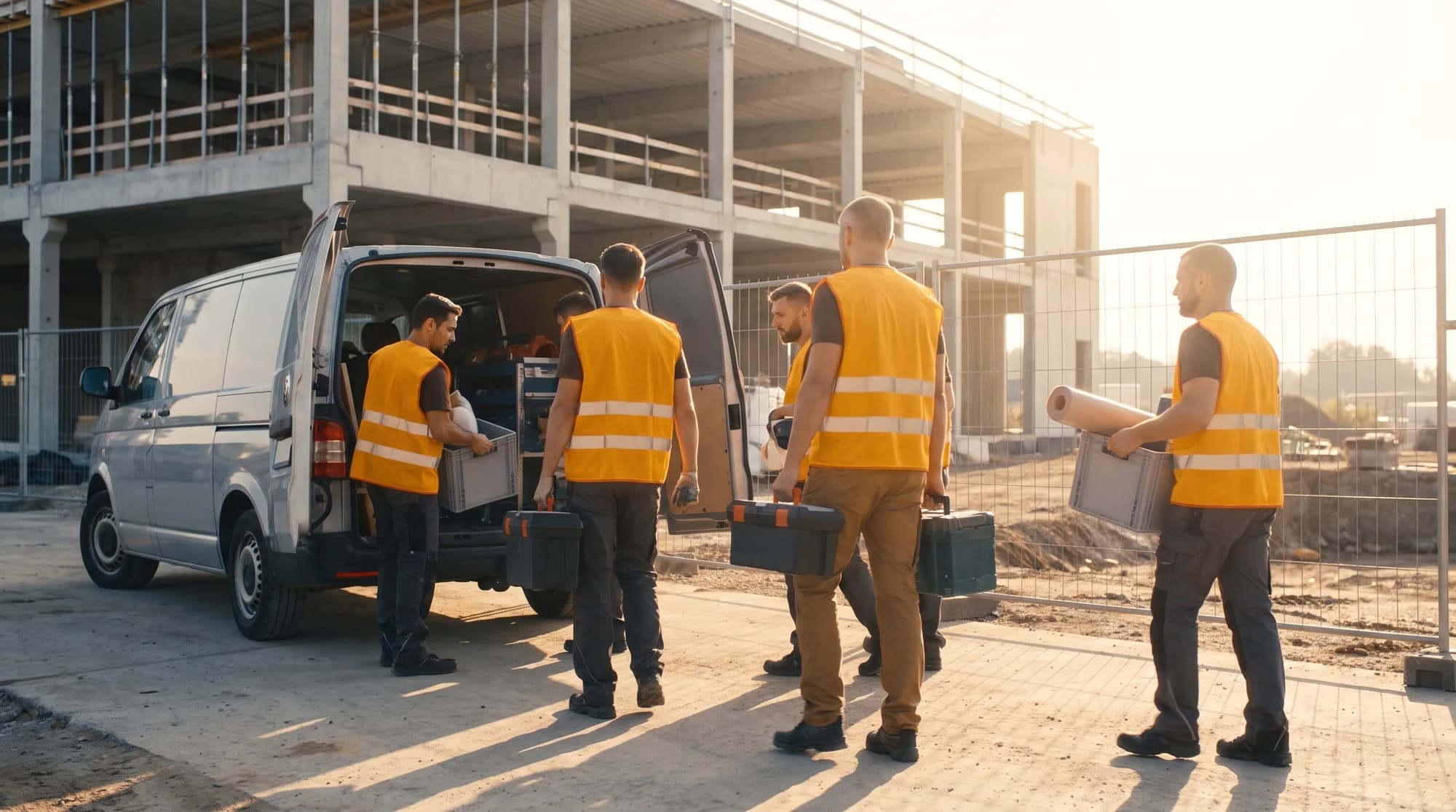
Selected partners instead of a chance find
Before we place a subcontractor, it has to submit these documents to us:
- Trade and tax registration, A1 certificates where required
- Work and residence permits of the workers deployed
- Contracts with a clear scope, liability and occupational safety rules
- References from comparable projects
Fields of deployment
Subcontractor teams take on work packages in industrial and plant assembly, metal and steel construction, warehousing and handling logistics, food processing, kitchen and service operations as well as in building and interior works, either as short-term reinforcement or as long-term capacity.
Also with teams from Vietnam and Asia
This is also the right route for crews from Vietnam and Asia: workers from third countries are deployed through service and subcontracting models, not through temporary staffing. Recruitment runs through partner structures on the ground; we act as intermediary and coordinator. The work permit and, where required, the A1 certificate are the responsibility of the partner company in the country of origin, and the client company verifies legal eligibility to work.
Or would a different model fit better?
Law, cost, process.
Why are workers from Eastern Europe more affordable?
More affordable does not mean lower quality: lower living costs in the countries of origin allow a different calculation, while pay stays fair and contractually fixed in line with the German minimum wage and collective agreements.
What is included in the hourly rate?
All inclusive as per quote: accommodation, vehicle and transport costs as well as overtime without surcharges, plus placement, ongoing support and administration. The agreed costs are fixed in writing before the assignment starts, and there are no hidden extras.
Is the German minimum wage observed?
Yes. Wages are contractually defined, and German labor law and collective standards apply to the employment relationship. Wage dumping is not compatible with our model.
Are the workers legally employed?
Yes. Every assignment requires either EU citizenship or valid residence and work permits. For workers from third countries, the partner company in the country of origin is responsible for the work permits, and the client site verifies legal eligibility to work. Registration, social insurance and payroll tax are handled properly.
How quickly are workers ready to start?
EU candidates often within a few days, complete teams usually in 7 to 10 days. That window does not apply to third countries such as Vietnam, the Philippines, India or Central Asia: there, recruitment runs through our partner structures on the ground and takes several months until the assignment starts.
Let us talk about your staffing needs.
Outline your plan and we will recommend the model that holds up commercially and contractually.