Workers from Asia for Germany: nine countries of origin and where which qualifications can really be found
Vietnam, the Philippines, India, Nepal, Pakistan, Central Asia: which profiles you find where, what lead time is realistic and which deployment model holds up.
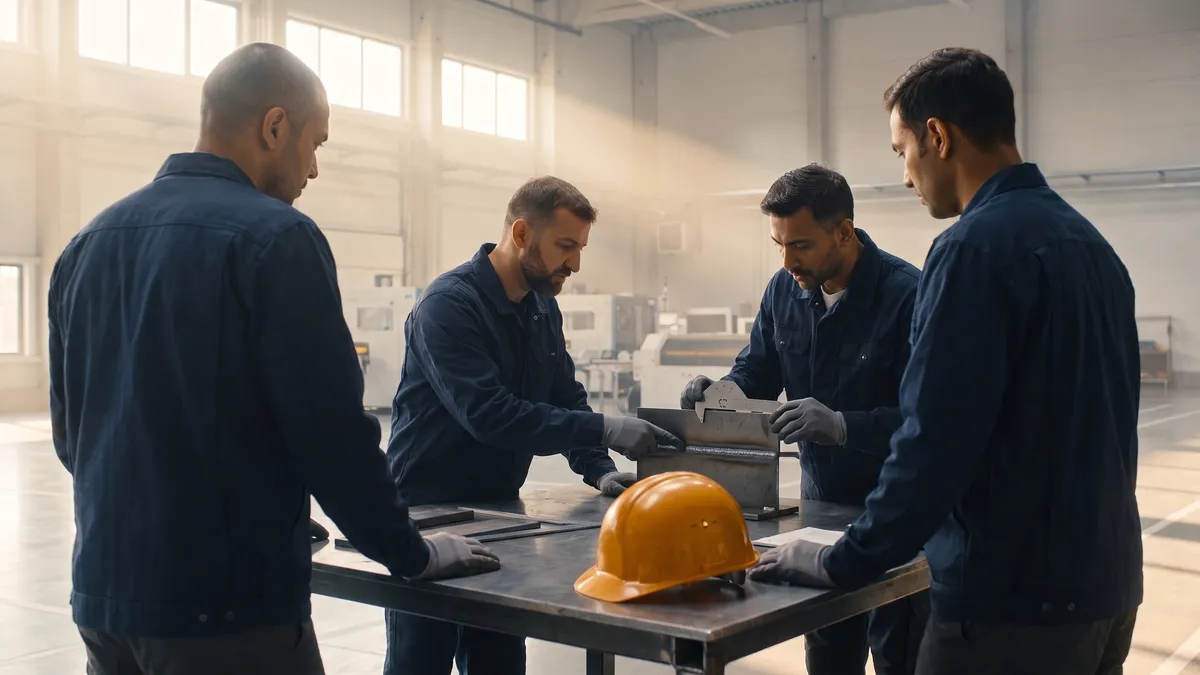
Anyone looking for workers from Asia for a company in Germany quickly gets a list of countries. There is rarely an answer to the real question: where do I find the profile my line needs? Our Asian network covers nine countries of origin. They include Vietnam and the Philippines in Southeast Asia, India, Nepal and Pakistan in South Asia, and Kazakhstan, Uzbekistan, Kyrgyzstan and Turkmenistan in Central Asia. The countries differ above all in language, occupational profiles and in how we recruit there. This overview sorts them by what companies actually want to know: which profile can be found where, what lead time is realistic, and which deployment model holds up? It does not replace an assessment of the individual case, but it saves you inquiries in the wrong direction.
Vietnam is the core of our Asian network. Here we recruit through our own network directly on the ground, not from anonymous lists. The focus is on the metal track: welders, metalworkers, fitters and machine operators for manufacturing, plant engineering and metalworking, plus production and construction helpers. We verify qualifications through certificates, documented professional practice and work samples on the ground. With welders we assess by process, that is MAG, TIG and stick, not by paperwork. For shipyards, welders with a yard profile are added. On request we run video interviews together with your company before a decision is made. If you want to fill a welding or metal position, this is the sensible place to start. More on occupational groups and selection is on our page on workers from Vietnam and Asia.
The Philippines stand for a different profile: English-speaking workers for processing, hospitality and logistics. If you plan staff from the Philippines for Germany, you gain above all on language. Many candidates work in English, which shortens onboarding. This brings the most where shift supervision and work instructions already function in English. India, by contrast, is a large recruitment market for industrial, construction and logistics profiles, from helper to fitter. For companies looking for skilled workers from India for production and assembly, the breadth of this market is what counts. We clarify qualification and language level before the decision, through documentation and personal interviews. That way you see early whether a candidate fits your line or whether another profile would hold up better.
Nepal and Pakistan complete the picture in South Asia. Nepal mainly supplies motivated helpers for production, construction and logistics. These are profiles for tasks with clear onboarding and fixed routines. Pakistan reaches further into qualification: industrial and construction profiles from helpers to metal and assembly specialists. Qualifications there are verified before selection on the basis of documentation and interviews. For your planning this means: if you want to reinforce a line with semi-skilled tasks, Nepal is a good starting point. If you need assembly or metal work with prior experience, include Pakistan in the search. In both countries we recruit through partners in South Asia, and selection follows your requirement profile.
Central Asia forms the fourth group. Kazakhstan, Uzbekistan, Kyrgyzstan and Turkmenistan are former CIS states with a strong tradition in industry, construction and logistics. The common feature is language: Russian as a shared working language makes supervision easier, especially in mixed teams. Many candidates from Kazakhstan bring experience from large plants and plant engineering. Uzbekistan is a young market eager to work, with production, construction and assembly profiles. Kyrgyzstan supplies Russian-speaking helper and skilled worker profiles for industry, construction and logistics. Turkmenistan is a smaller but dependable market for helpers and assembly workers. If Russian-speaking colleagues already work in your company, that can noticeably ease the start. You will find all four countries with a short profile in our overview of countries of origin.
Deploying workers from Asia in Germany follows the same framework in all nine countries, whatever profile you are looking for. Temporary staffing (German AÜG, Arbeitnehmerüberlassung) is reserved for workers with an EU passport. Staff from Asia are therefore deployed exclusively through service, contract-for-work and subcontracting models, never as temporary staffing. Recruitment runs through partner structures on the ground. Arbeitina acts as intermediary and coordinator; the employer of the workers remains the partner company in the country of origin. Responsibility for work permits and eligibility requirements rests with the partner company and your company as the client site. Under a contract for work (Werkvertrag), a result is owed, and the team organizes itself and receives no instructions from your company. How this looks in detail is described on our page on contracts for work. We design every model so that it is clearly separated, and we turn down anything we cannot separate cleanly. The legal assessment in the individual case remains with your company.
How much lead time is realistic for staff from Asia? In all nine countries, plan for several months until the assignment starts. The assignment requires valid work permits, and obtaining them in the country of origin takes this long depending on the occupation. The more precisely your requirement profile is defined, the more targeted the selection. In return the process is predictable: after the requirement analysis we give you a realistic schedule and report every interim step, from selection on the ground to the first working day. So do not plan Asia as the fire brigade for the next order peak, but as a fixed component for the demand of the coming months. We help organize travel and accommodation, and a dedicated, multilingual contact person remains available to the company and the workers after the start.
Do you handle visa consulting or dealings with the authorities? No. We do not offer visa consulting or immigration services. The work documents are the responsibility of the partner company in the country of origin, including the work permit and, where required, the A1 certificate. Whether a worker may work in the specific assignment is clarified by your company before the first working day. No one can seriously guarantee decisions by the authorities. Our task is intermediation and coordination between your company and the partner company. If you are planning workers from Asia for your company in Germany, describe the assignment, number of workers and period to us on our contact page. You will receive an honest assessment of which of the nine countries fits your profile and whether the European market might cover your demand better.
This might concern you too.
Let us talk about your staffing needs.
Outline your plan and we will recommend the model that holds up commercially and contractually.