Finding certified welders: why the shortage gets expensive in 2026
Testing by process instead of paperwork, two sourcing routes and an honest look at the hourly rate: what metal shops and shipyards plan for when welders are missing.
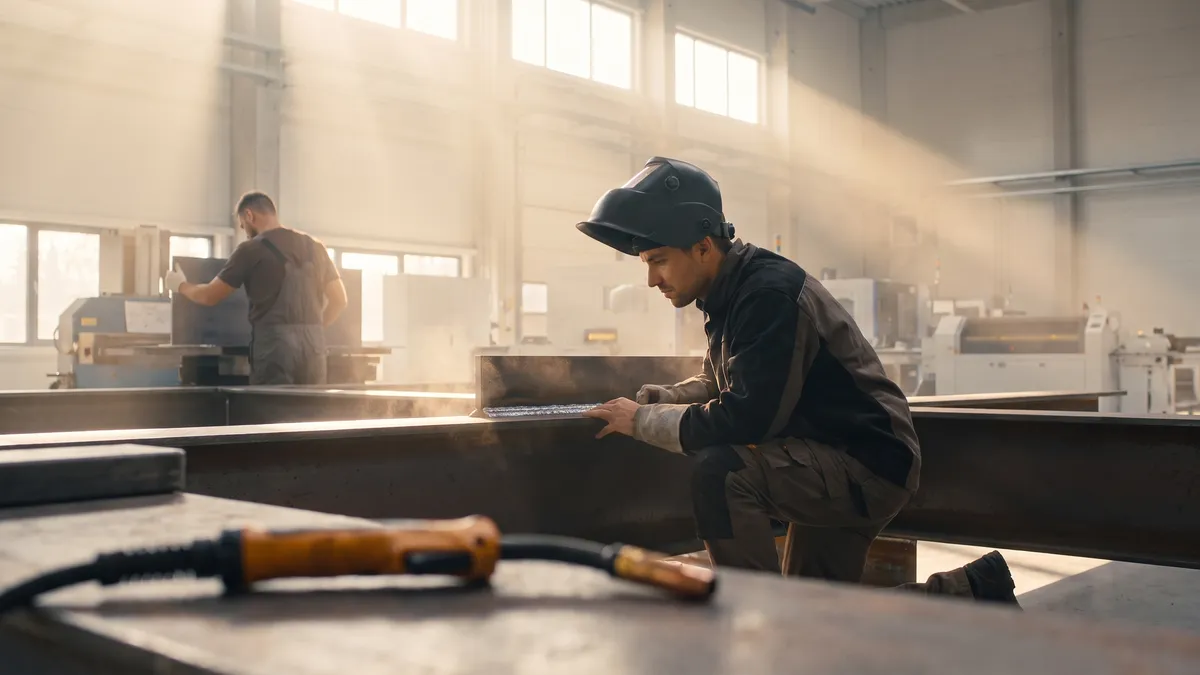
Anyone looking for a staffing provider for welders is rarely looking for just any welder. What is wanted is someone with a valid qualification test in the right process, in the matching base material and in the matching position. That is exactly where many positions get stuck in 2026, even though the labor market as a whole has become calmer. The skilled-labor shortage analysis of the Federal Employment Agency sees the largest bottlenecks in construction and craft occupations, among others; for machining metalwork it most recently no longer reports a shortage. In shop-floor practice, metal fabricators and shipyards nevertheless experience something different. A position stays open there mostly because the existing qualification test does not match the workpiece. The number of applications says little about how many of them may actually weld on the specific component.
The difference lies in the scope of validity. A welder qualification test to DIN EN ISO 9606-1 never applies across the board. It covers one process, that is MAG, TIG or stick, plus material group, plate thickness or pipe diameter and the position. Whoever lays fillet welds in constrained positions in section construction is not automatically qualified for a pipeline. Then there is the deadline. The certificate is time-limited and loses its validity earlier if the welding coordinator does not confirm the ongoing activity regularly. A résumé with the word welder on it therefore says almost nothing. Only certificate, scope of validity and documented practice together produce a picture you can compare with your component. Depending on the application, for example in yard construction or in structural steelwork, further requirements from the relevant standards are added.
The shortage rarely turns expensive at the hourly rate, but at the time. An unfilled welding position holds up a section, pushes back the acceptance and endangers deadlines that are contractually pinned down. Rework on faulty welds costs additional material, inspection time and capacity at the jig. Against that background the rate is worth a look: certified welders start at €31.00 net per hour, skilled helpers for assembly and metalwork at €26.90 net per hour. These are indicative rates; the binding rate is set in the quote after the requirement analysis. Accommodation, vehicle and transport costs as well as overtime without surcharges are included all inclusive as per quote. Anyone organizing those items themselves at a lower headline rate often ends up with a different calculation.
A staffing provider for welders therefore works with two separate routes. The first is Eastern Europe. Skilled workers with an EU passport from Eastern Europe are as a rule on site within 7 to 10 days, for example from Poland, Czechia, Slovakia, Hungary or the Baltics. That is a value from experience and applies expressly to this route only. The assignment then usually runs through staff leasing, legally temporary staffing (German AÜG, Arbeitnehmerüberlassung). The lender and employer is a licensed partner company that carries the employer obligations. Arbeitina acts as intermediary and coordinator, and your company remains the client site with the duties that arise there. Which profiles stand behind this, from fitter to machinist, is described on our industry page on metal and metalworking.
The second route is Asia, and it follows different rules. If the European market does not cover your demand, we recruit welders and metal specialists through our own network in Vietnam. This route needs several months of lead time, because the assignment requires valid work permits and obtaining them in the country of origin takes time. Temporary staffing is ruled out here; it is reserved for workers with an EU passport. Staff from Vietnam are deployed exclusively through service, contract-for-work and subcontracting models. The employer remains the partner company in the country of origin, which is also responsible for the work permits; we act as intermediary and coordinator. We do not offer visa consulting or immigration services. How selection and qualification checks work there is described on our page on workers from Vietnam and Asia.
What does a certified welder cost through a staffing provider? Certified welders begin at €31.00 net per hour, skilled helpers for assembly and metalwork at €26.90 net per hour. Both are indicative rates; the rate only becomes binding in the quote after the requirement analysis. It depends on the profile, the length of the assignment, the shift pattern and the distance from the workers' home. Accommodation, vehicle and transport costs as well as overtime without surcharges are included as per quote, which distorts the comparison with a bare hourly rate. So set the rate against the items you would otherwise carry yourself, and against the cost of a week of standstill at the jig.
Can we hire MAG and TIG welders at short notice? Anyone searching for “renting welders” usually means staff leasing, that is temporary staffing. This model is open to workers with an EU passport, and from Eastern Europe a placement is typically feasible in 7 to 10 days, depending on process and number. The lender and employer is a licensed partner company, not your company and not Arbeitina. For yard profiles such as pipe fitters, steel workers and yard welders we describe the process on our page on shipbuilding. For workers from third countries this time window does not apply; there you plan for several months. At short notice does not mean immediately: without a solid requirement profile the search costs more time than it saves.
How do we tell whether a welder from abroad fits our component? By the requirement profile you give us: process, base material, weld type, position and scope of testing. We then make the selection and assess the qualification, through certificates, documented professional practice and, on request, work samples, with welders judged separately by process. Video interviews together with your welding coordinator are possible before a decision is made. Whether a certificate holds up for your specific assignment is judged by your company; the legal assessment in the individual case remains with you. Describe the assignment, process, number and period to us on our contact page. You receive an honest assessment of profiles and schedule, and whether you need a staffing provider for it is something you decide afterwards.
This might concern you too.
Let us talk about your staffing needs.
Outline your plan and we will recommend the model that holds up commercially and contractually.